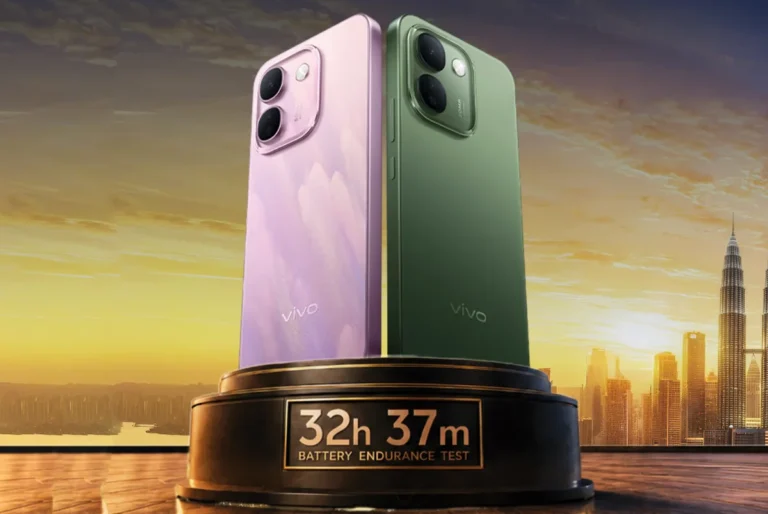
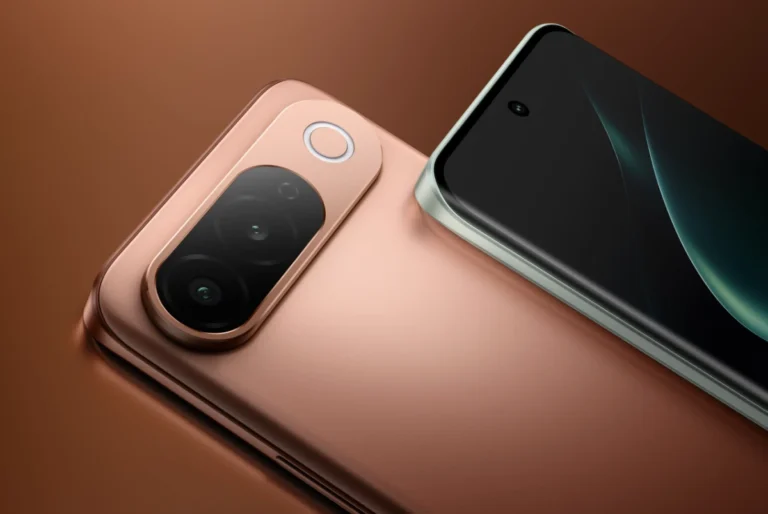
vivo launches its latest budget smartphone, the vivo Y17s, in the Philippines. The smartphone, which we spotted on vivo’s website a week ago, is now available vivo offline and online stores. It boasts a 50MP main camera, a 5000mAh battery, and an IP54 rating for dust and water resistance.
The vivo Y17s features a 6.56-inch HD+ IPS LCD display with a notch for the 8MP selfie camera. It is powered by the MediaTek Helio G85 processor, paired with 4GB of RAM and 128GB of internal storage, which can be expanded up to 1TB via a microSD card.
The rear camera setup consists of a 50MP primary sensor with autofocus and an f/1.8 aperture, and a 2MP depth sensor for bokeh effects. The camera also supports Super Night Mode, Stylish Night Filters, and Flare effects.
The vivo Y17s packs a 5000mAh battery that supports 15W fast charging via a USB Type-C port. It also has a side-mounted fingerprint scanner, face recognition, dual SIM slots, 4G LTE, dual-band Wi-Fi, Bluetooth 5.2, GPS, an FM radio, and a 3.5mm audio jack. The phone runs on Funtouch OS 13, on top of Android 13.
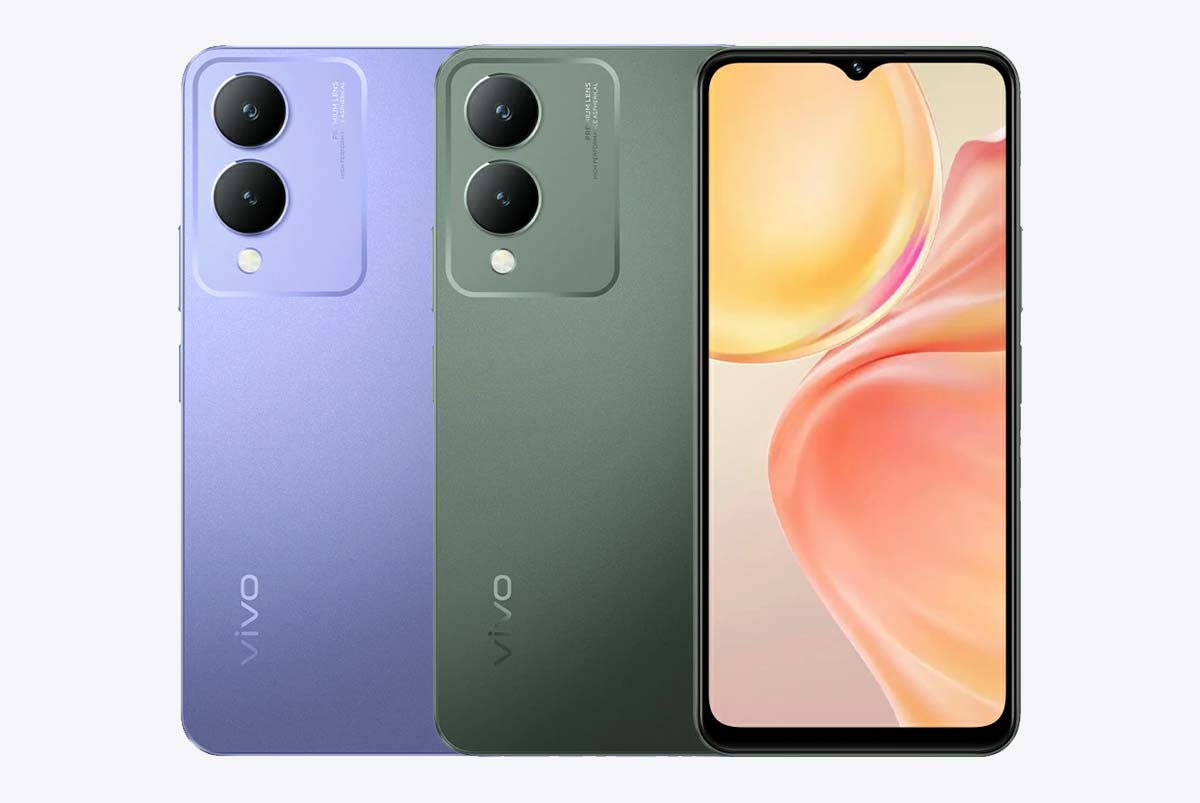
The vivo Y17s is priced at ₱6,999 in the Philippines and is available on the vivo’s official website or through e-commerce platforms Shopee, Lazada, and TikTok, as well as at physical stores nationwide.
vivo Y17s specs
| Display | 6.56-inch HD+ IPS display, 1612×720 |
| Processor | MediaTek Helio G85 |
| RAM/Storage | 4GB+128GB |
| Rear Cameras | 50MP main, OIS 2MP depth |
| Front Camera | 8MP |
| Network | 4G LTE, dual SIM |
| Connectivity | Wi-Fi, Bluetooth 5.2, GPS |
| Others | Side fingerprint scanner, USB-C, IP54, FM radio |
| OS | Funtouch OS 13, Android 13 |
| Colors | Glitter Purple, Forest Green |
| Battery | 5000mAh battery, 15W fast charging |