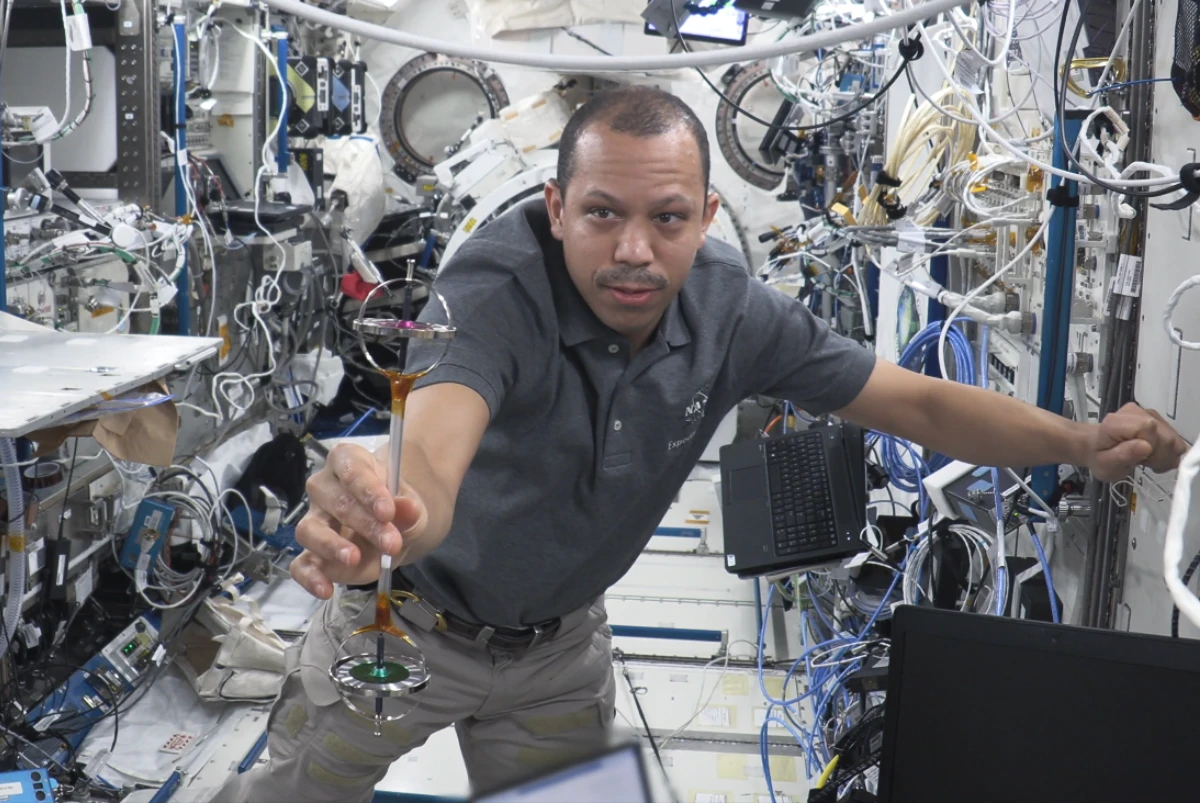
Two Filipino students had their science experiment carried out in space by a NASA astronaut — a proud milestone for Philippine science education.
Ryan Andrew Doña and Christopher Tumamac, members of Team Double Gyroscope, represented the Philippines in the Asian Try Zero‑G (ATZG) 2025 program organized by the Japan Aerospace Exploration Agency (JAXA).
The initiative invites students across Asia to design experiments that can be performed aboard the Kibo module of the International Space Station.
The team presented their proposal at the JAXA Tsukuba Space Center before the live execution in orbit. Their experiment explored gyroscopic motion in zero gravity, and the results aligned with their hypotheses, confirming their understanding of physics in microgravity.
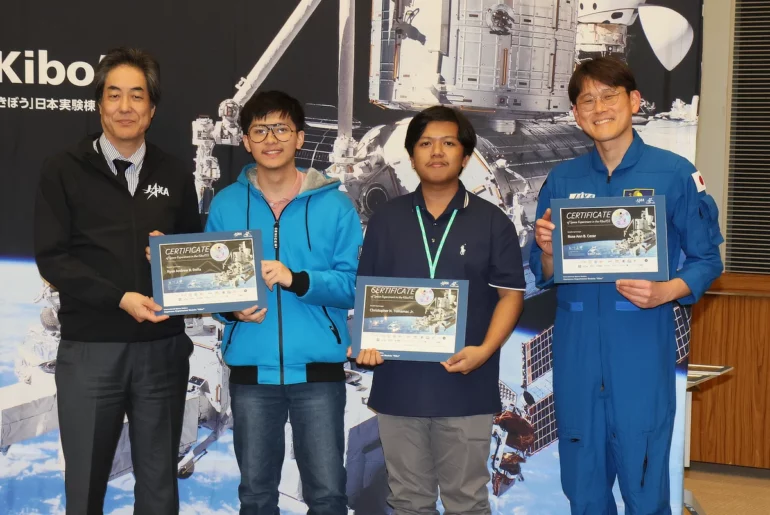
Certificates of recognition were awarded by Dr. Masaki Shirakawa, Director of JAXA’s Kibo Utilization Center, and JAXA Astronaut Norishige Kannai. The recognition highlights the Philippines’ growing presence in international space research, supported by PhilSA, the Philippine Space Agency.
Reflecting on their ATZG experience, the students said that conducting experiments in zero gravity comes with unique challenges and opportunities.
Also Read: First Filipino-built satellite Diwata-1 turns 10
Even simple movements behave differently when weightlessness is involved, showing how space science continues to inspire curiosity among young Filipinos.